recipe rescue


services

product strategy
user research
experience design
rapid prototyping

info

Recipe Rescue is a cooking assistant that connects the recipes you save with what is already in your kitchen, helping you work out what to cook and what you still need. Built by a six person team, we took it from initial framing to a clickable prototype.

Course: AI & Tech in Product + Service Strategy @ IE University



the problem: crazy schedules + hunger

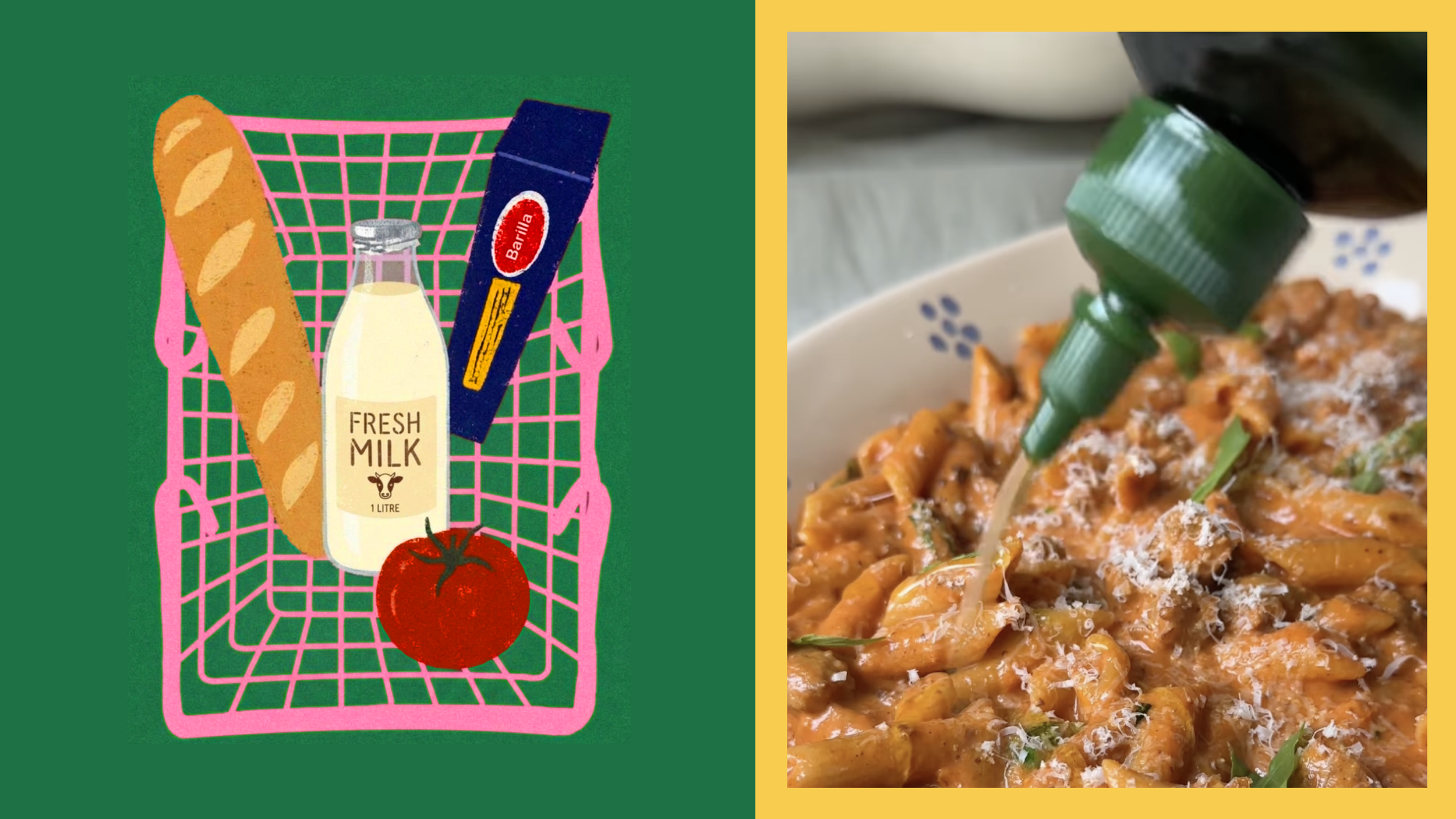
You arrive home at 10 p.m. after class on a Thursday, exhausted, and open the fridge to find two eggs, half a carton of milk, half a bottle of sundried tomatoes and leftovers from Monday.

so, what is dinner?

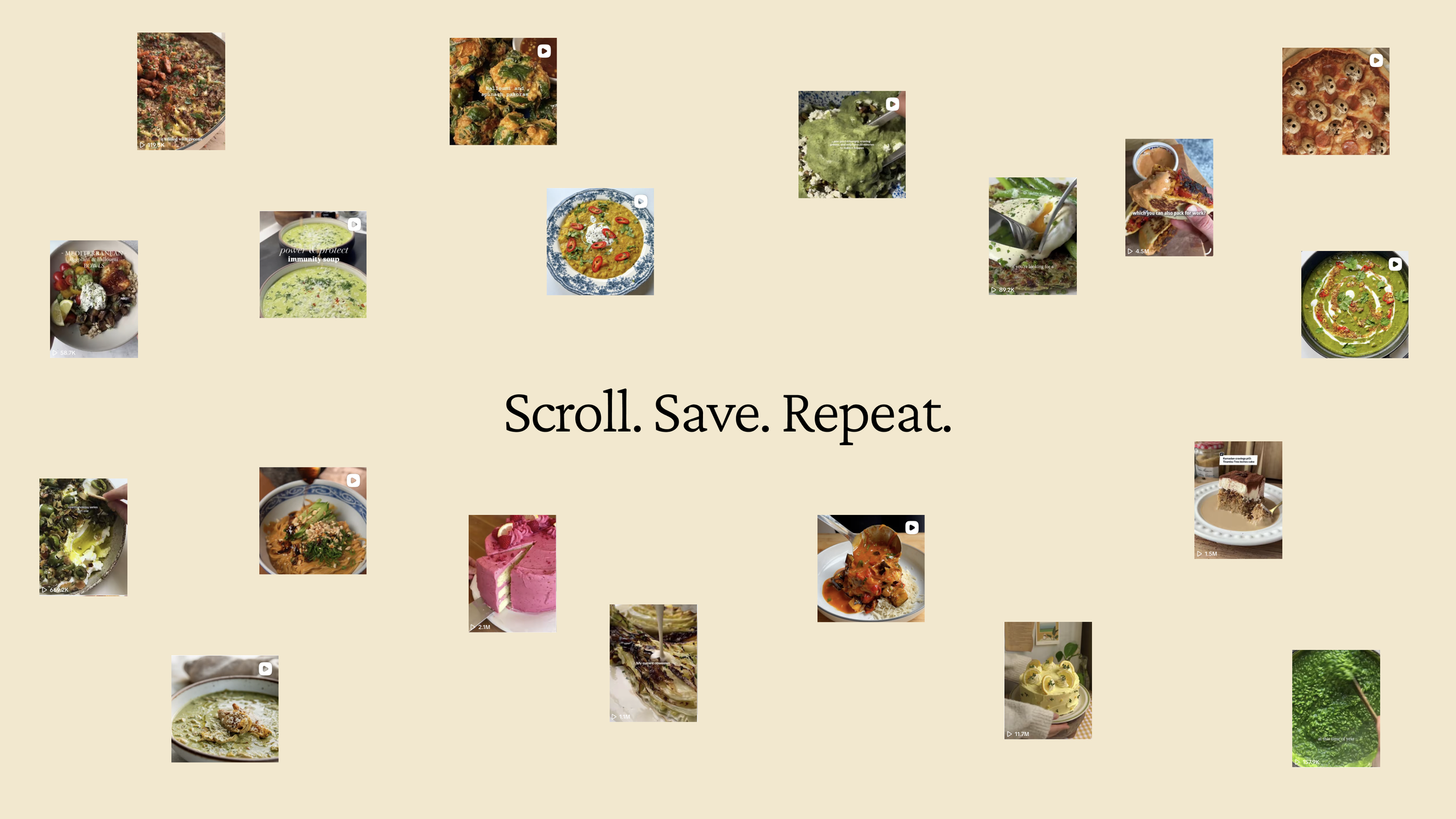
Is it going to be one of the 1000+ recipes sitting in your Instagram saves that you found over the weekend and were absolutely going to make this week, because you’re on your health grind, in your budget conscious era and also trying not to contribute to food waste? Or is it an Uber Eats click because, you just need to be fed and make your 8am class tomorrow.

Some nights, it’s takeout. Other nights, it’s a slice of Gouda.
And we wanted out of that loop.


the missing connection


We started with ourselves, but we didn’t want to design for six people in a classroom. Through interviews, user stories, self reflection and early sketches, we started mapping where the friction actually sat.

Recipes already live in lots of places, from social saves and websites to cookbooks and family recipes. Discovery wasn’t the issue. The mess started afterwards, when saved recipes, kitchen inventory and shopping lived in separate systems.

So we built Recipe Rescue around the missing connection between what people wanted to cook and what they could actually make.


start where you are


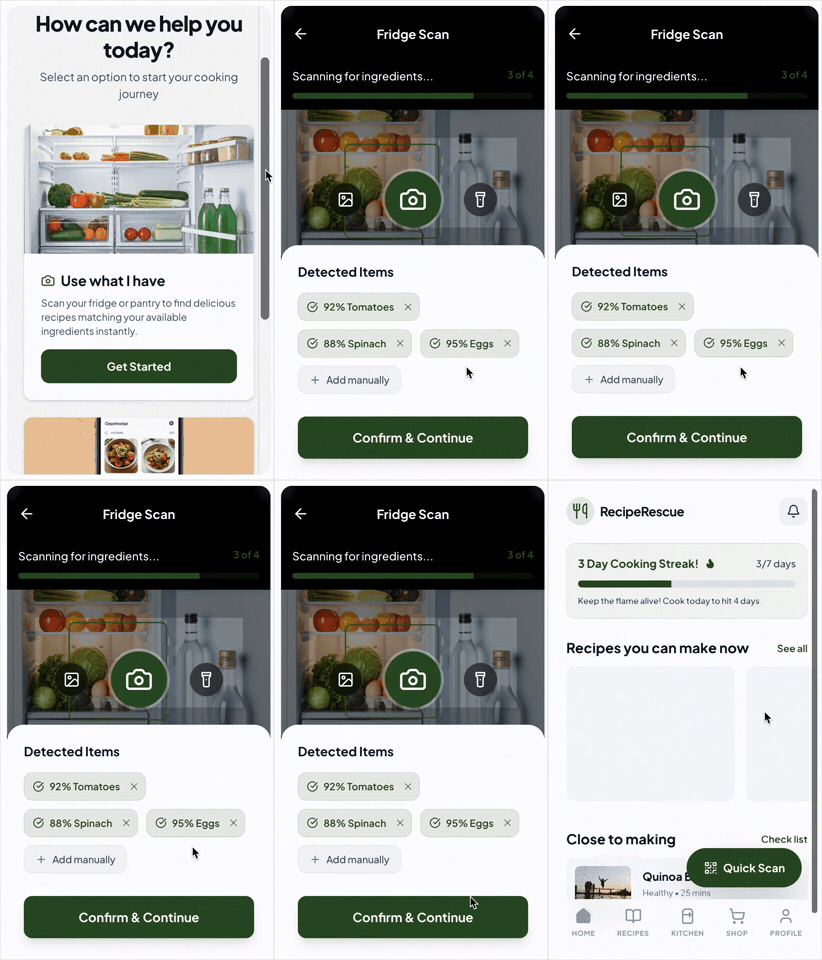
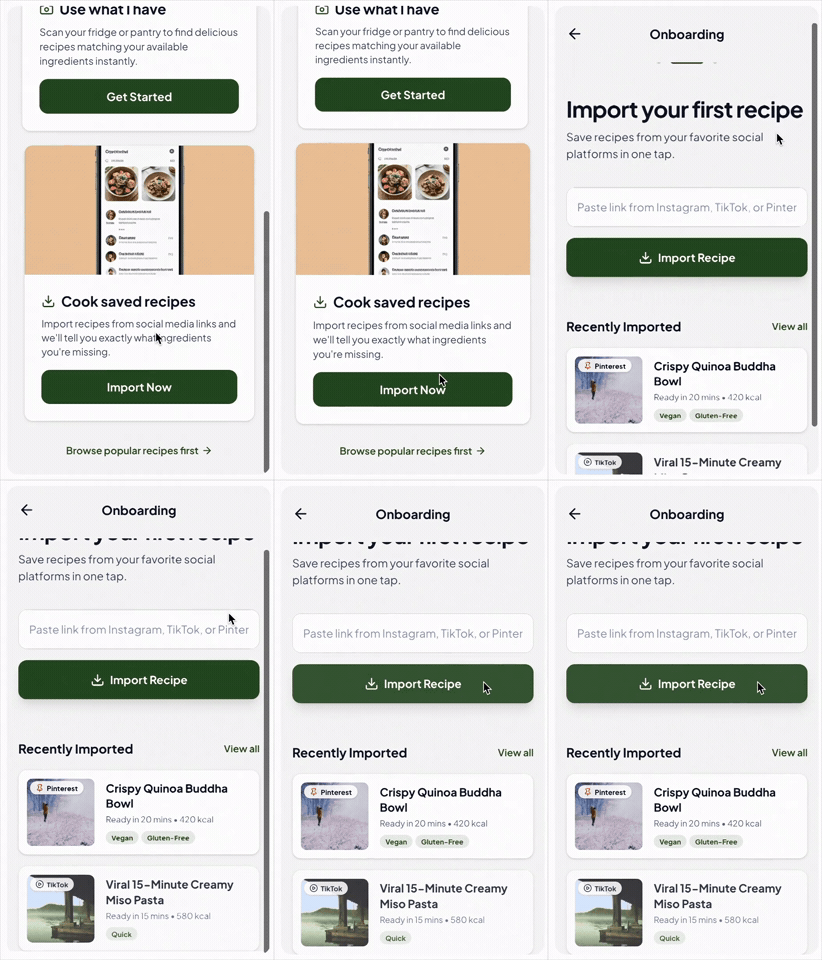
People don't always approach cooking from the same place. So we designed two simple entry points: use what you already have, or cook from your saved recipes.

For the prototype, we focused on simple ways to import recipes, like a social media post or recipe website, while leaving room for broader sources later.

The inventory side came with its own friction: keeping it up to date. We didn’t want Recipe Rescue to depend on people manually logging every egg, onion and leftover, so we prototyped the fridge and pantry scanning as a lighter way to keep track of what was already there.

(Tiny shoutout to Indyx for inspiring how I thought about designing convenience into key features for habit building.)


shop the gaps


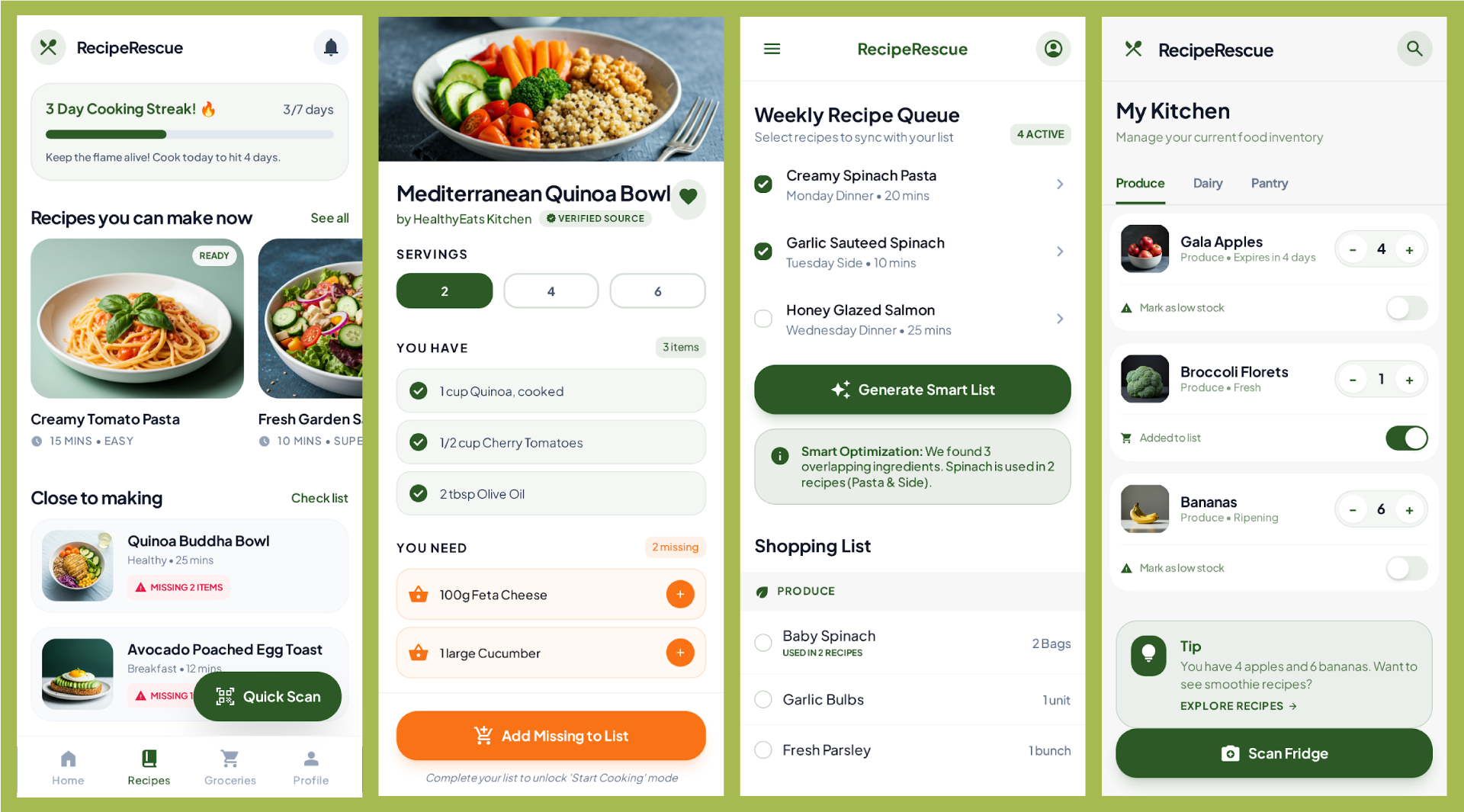
Once Recipe Rescue understands what you want to make and what’s already in your kitchen, it can look across several meals and consolidate what you actually need to buy.

Three recipes need cilantro?

One bag. Not three.

Bonus: the financial and sustainability benefits become part of how the system works rather than another thing to manage.


what made the cut?

There were plenty of directions Recipe Rescue could have gone. For the MVP, we focused on designing a five minute core user journey needed to get from your existing stock, to the overlap, and finally to a dish. Our envisioned roadmap started with premium subscriptions to unlock advanced planning, nutrition tracking and personalized recommendations, alongside grocery affiliate and brand partnerships, including helpful grocery substitutions. Longer term, we saw opportunities to extend into a connected ecosystem spanning grocery platforms, smart fridges and home assistants.


so, what are we cooking next?

Recipe Rescue is still a product concept and clickable prototype, but it’s one I’d like to keep developing, if only to save myself from the mental gymnastics I still go through in my kitchen every day.


team

Farah Abdou
Cindia Escalante Vinuesa
Bhavya Jagadesh
Mariana Porras Mena
Maryam Sánchez González
Ximena Thiermann


tools

Figma / FigJam
ChatGPT
Stitch
Google AI Studio